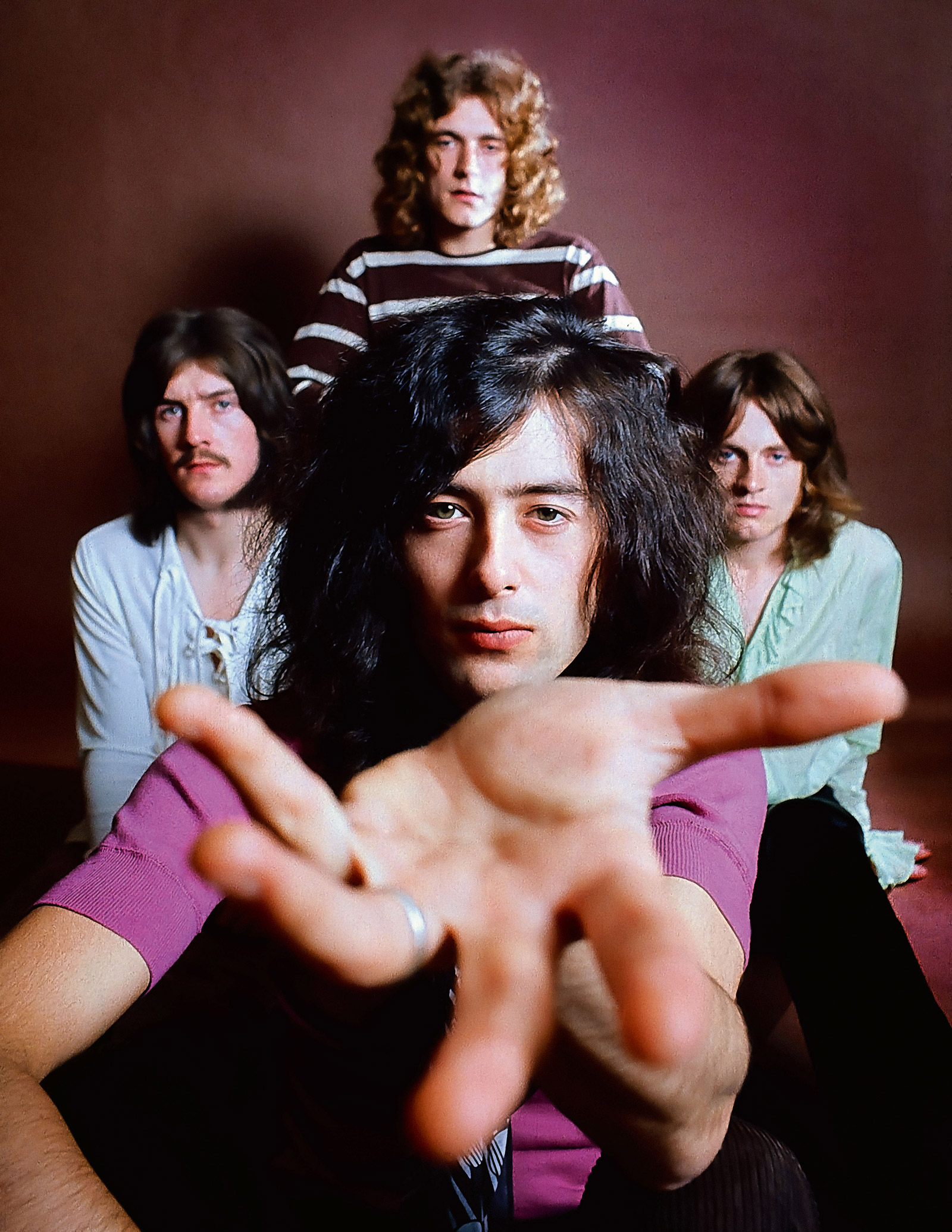
Before hard rock found its own voice, it inherited the thunder of the previous generation.
And no band thundered louder than Led Zeppelin.
Jimmy Page wasn’t just the guitarist.
He was the architect — producer, arranger, and keeper of the myth.
Ranking Zeppelin albums is dangerous business, but here’s my take.
1. Led Zeppelin IV (1971)
This is the temple.
It’s impossible to talk about Zeppelin without talking about the fourth album. Engineer Andy Johns helped Page capture the thunder of “When the Levee Breaks” by placing John Bonham’s drums in a stairwell and miking them from above. The result became one of the most famous drum sounds in rock history.
Then there’s “Stairway to Heaven.”
But the real magic of Led Zeppelin IV is range.
“Black Dog” and “Rock and Roll” roar like muscle cars.
“The Battle of Evermore” drifts into eerie folk mysticism, with Sandy Denny’s ghostly harmonies giving the song the feeling of an ancient warning carried through fog.
“Going to California” is the album’s moment of stillness. Page’s acoustic guitar drifts beneath Plant’s searching voice like a traveler speaking softly after a long road. In a record full of thunder, it’s the sound of the storm pausing long enough to breathe.
This is the moment Zeppelin became myth.
2. Led Zeppelin II (1969)
This is where the band discovered its power.
Recorded across multiple studios while the band was constantly touring, Led Zeppelin II feels raw, hungry, and slightly out of control.
Engineer Eddie Kramer helped Page shape that chaos into something explosive. Kramer had already worked with Jimi Hendrix, and his aggressive engineering style fit Zeppelin perfectly.
“Whole Lotta Love” alone rewrote the rulebook for hard rock.
The riffs are heavier.
The grooves swing harder.
Everything feels bigger.
This album doesn’t sound careful.
It sounds hungry.
3. Physical Graffiti (1975)
The most complete Zeppelin album.
A double LP that somehow never feels bloated.
“Kashmir” is the crown jewel — a colossal, hypnotic march that sounds like rock music discovering the desert for the first time.
Page dug through years of tapes to build the record, resurrecting unfinished tracks and shaping them into something massive. The result is Zeppelin at full scale: blues, hard rock, folk, funk, mysticism, and sheer excess all colliding together.
“In My Time of Dying” feels biblical.
“Trampled Under Foot” grooves like mechanized funk.
“Ten Years Gone” aches with distance and memory.
This is the last moment before excess became a burden.
The last pure expression of Zeppelin’s boundless ambition.
4. Led Zeppelin I (1969)
The opening strike.
Recorded quickly and cheaply, the debut sounds like a live band kicking down the studio door.
Engineer Glyn Johns helped Page capture that raw electricity with remarkable clarity. The performances feel immediate, almost dangerous, like the tape machine is barely keeping up with the band.
The blues is everywhere — but twisted into something louder, faster, and far more violent.
“Dazed and Confused” feels sinister.
“Communication Breakdown” practically invents punk energy years early.
Heavy rock begins here.
5. Led Zeppelin III (1970)
The curveball.
After two massive rock records, Zeppelin retreated into acoustic guitars, folk textures, and open space.
“Immigrant Song” is the lone war cry.
The rest explores quieter territory.
Page and Andy Johns layered mandolins, acoustics, and room ambience into something warm and strangely intimate. “That’s the Way” and “Tangerine” feel nostalgic without becoming sentimental.
It confused fans at the time.
Now it sounds fearless.
Led Zeppelin III doesn’t abandon power.
It transforms it.
The result is music that sounds like a storm choosing to whisper instead of break.
6. Houses of the Holy (1973)
This is Zeppelin experimenting.
The beast changes shape.
Eddie Kramer helped guide the band through one of their strangest and most adventurous records.
“The Rain Song” is gorgeous and mournful.
“No Quarter” descends into pure atmosphere and shadow.
“The Crunge” and “D’yer Mak’er” show the band deliberately refusing to become predictable.
It’s messy in places.
But that’s part of its charm.
This is a band restless at the height of its powers, testing how far Zeppelin could stretch before it stopped sounding like Zeppelin.
7. In Through the Out Door (1979)
By now the balance inside Zeppelin had changed.
Jimmy Page was struggling.
John Bonham was unraveling.
So John Paul Jones stepped forward.
The album is full of keyboards, cleaner production, and more structured songwriting. Engineer Leif Mases gave the record a polished clarity unlike anything earlier in Zeppelin’s catalog.
Compared to the cavernous depth of Physical Graffiti, this album feels almost clinical at times.
But that’s also what makes it fascinating.
It’s Zeppelin evolving into something more modern, more introspective, and slightly uncertain about its own future.
A strange record.
But an important one.
8. Presence (1976)
Zeppelin under pressure.
Robert Plant recorded much of the album while recovering from serious injuries. Page was exhausted and increasingly trapped inside addiction.
The result is stripped down, tense, and relentless.
“Achilles Last Stand” charges forward like a battle anthem — one of the greatest performances Zeppelin ever recorded.
The rest of the album feels almost claustrophobic.
No mysticism.
No grandeur.
Just survival.
Engineer Keith Harwood captured the band with very little ornamentation. The mix is dry, sharp, and unforgiving.
Presence has no radio-friendly warmth.
It burns instead.
Not their most beloved record.
But maybe their most defiant.
9. Coda (1982)
An epilogue.
Released after John Bonham’s death, Coda collects leftover tracks from earlier sessions. It was never intended to be a true final statement.
And yet it still matters.
“Wearing and Tearing” thrashes with surprising ferocity, hinting at directions the band might have explored had Zeppelin survived into the 1980s.
If Coda feels incomplete, it’s because it was never meant to be whole.
It’s the last echo of a storm that had already passed.
The gods descended.
The thunder faded.
But the records remain.