add_filter( 'auto_update_plugin', '__return_true' );

The Space Between the Beats

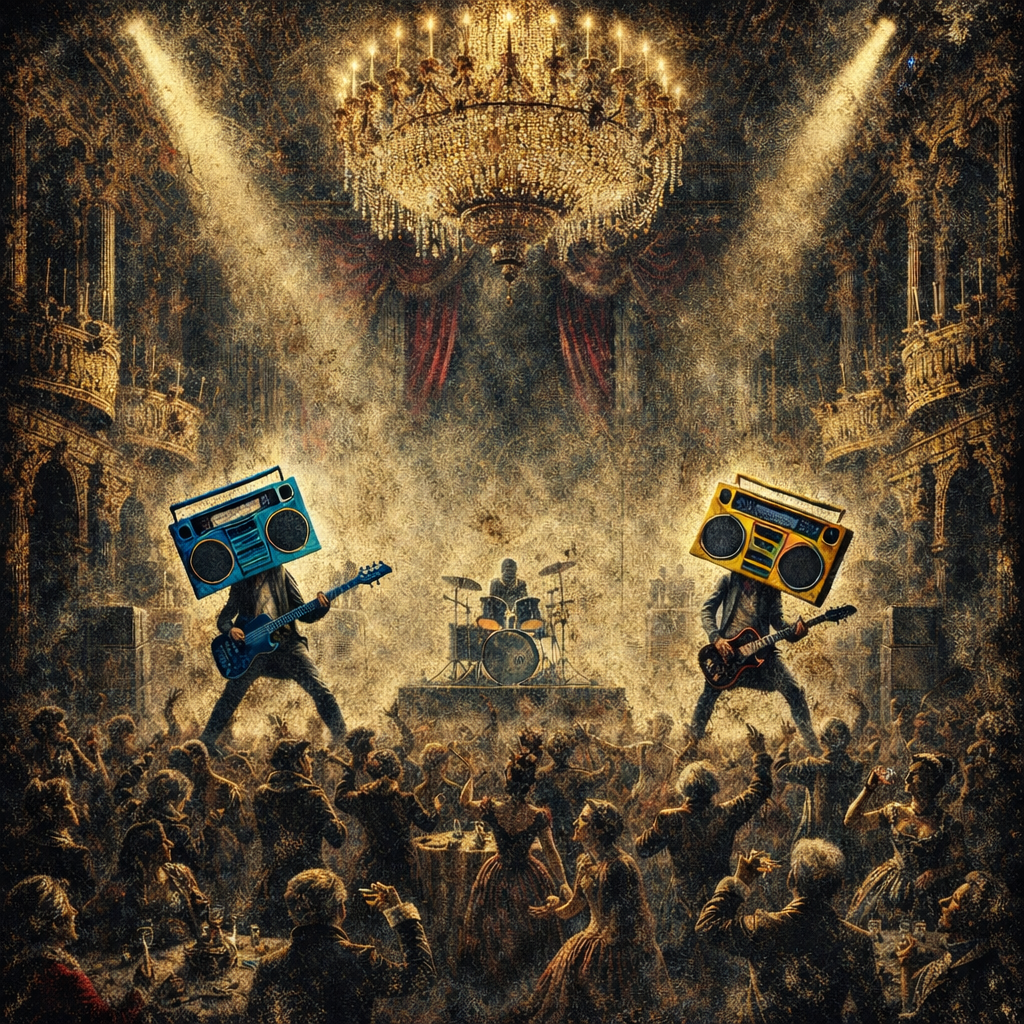
The clock struck three in the somber night as the four of us journeyed towards our grand performance. In music, the space between the beats is important. Life, too, unfolds in these spaces.

The relentless snowfall painted a thick veil of white upon the perilous black ice of the mountain highway. Our windshield wipers battled valiantly, their efforts hardly enough to reveal the treacherous path that lay ahead or the abyss of the valley beside. Shrouded by dense fog, in the bitter cold, we pressed on.

Then, in an instant, a booming thud resounded through the night air. Jerome, the valiant helmsman of our carriage, grappled with the wheel as it bucked and fishtailed violently along the icy road. In the back seat, I quickly accepted the fate that seemed imminent, a fate of being reduced to nothing but a mangled mess upon the desolate highway. Next to me, Keefer raised his arms and opened his mouth in dramatic slow motion.

But, onward we pressed, albeit amidst chaos.

“By the stars, thou hast done well, my friend!” I extolled Jerome for his admirable navigation.

“I aimed for the smallest of them,” he replied earnestly. “Three creatures there were, but alas, they appeared before I could discern their presence.”

“Aye, indeed,” added Thud Pumpkin. “Fortunate it was a deer and not a towering moose, for with their long limbs, they could thrust through the very windshield.”

Nonetheless, a hundred leagues still lay between us and the next village, and our headlights had relinquished their radiance to darkness. We found ourselves bereft of warmth, frequently halting in the middle of the highway to replenish the radiator now adorned with six antler holes, spewing the lifeblood of antifreeze. With steady perseverance, we inched closer to the next haven, repairing the beleaguered radiator upon our arrival. The culmination of our efforts allowed us to grace the stage precisely as the hour struck for the grand performance.

The evening greeted us with a throng that stretched for blocks, and the elixir of tequila flowed generously, akin to the flowing streams of Dionysian revelry. From the stage, we beheld the fervent punk maidens, their spirits alight with vivacious dance. As the night unfolded, Keefer and I ventured into the chamber of reflection, where a pair of shoes betrayed their presence beneath a cubicle. Curiosity beguiled Keefer, compelling him to peer over the cubicle, revealing a familiar fan. His unbuttoned sleeve, rolled past his elbow, bore witness to a needle embedded below a small tattoo of a heart with chains.

“Dude, dost it prove effective for thee?” Keefer inquired.

He seemed unaware of Keefer’s intrusion, but Keefer persisted, “Pray tell, does it avail thee, my friend?”

In that moment, I felt a gentle tap upon my shoulder. A fervent punk maiden appeared before me.

“Would you not desire to embrace me passionately?” she questioned with fervor.

“What might you offer in return?” I inquired with a measure of nonchalance.

“I knew it,” she exclaimed in excitement.

With that, we departed from the jubilant assembly and made our way back to the sanctuary of the hotel. The curtains had fallen upon the grand spectacle, and now it was time to embrace the space between the beats.
Gravity and Jack Daniel’s

we, fearing Fortune’s fickle smile, did climb the mountain’s breast to drink our courage down.
There, where dawn’s pale breath unstitched the stars, I sought the slope alone,
hoping the maidens might descend and grant discourse
on matters grave — such as why their shoes and hair conspired in such strange discord.

But lo! mid-thought, I lost acquaintance with the earth.
The bond ‘twixt man and gravity was broke,
and down I fell — a hundred cubits deep into the pit of my own design.
Yet providence, mocking yet merciful, set me upon a lonely tree,
whose arms, though frail, received me as a sinner spared.

There hung I, bruised of knee and conscience both,
and mused upon my life — that poor concerto played in service of the Muse.
Call it not noble, this pursuit of sound!
I had sought art for art’s own sake, and found but vanity adorned.
For music and art, though oft they dance, do seldom wed;
and where I left my soul, I scarce remember.

Oft upon the stage I hear them prattle:
“He’s comely.”
“Would he but smile.”
“What monstrous hair is that?”
And I, poor fool, within myself reply,
“One day shall a princess understand.”
Yet even as I dream, a god — whose earthly name is Eddie Van Halen —
whispers, “Dream not, for dreams are but the opiate of the damned.”

Thus instructed, I hung upon my wooden cross
and pondered beauty —
She whom I loved was fair beyond my telling,
yet her knowing it made my silence wise.
Women perceive too soon how simple men really are.

And what, I thought, makes us more than beasts?
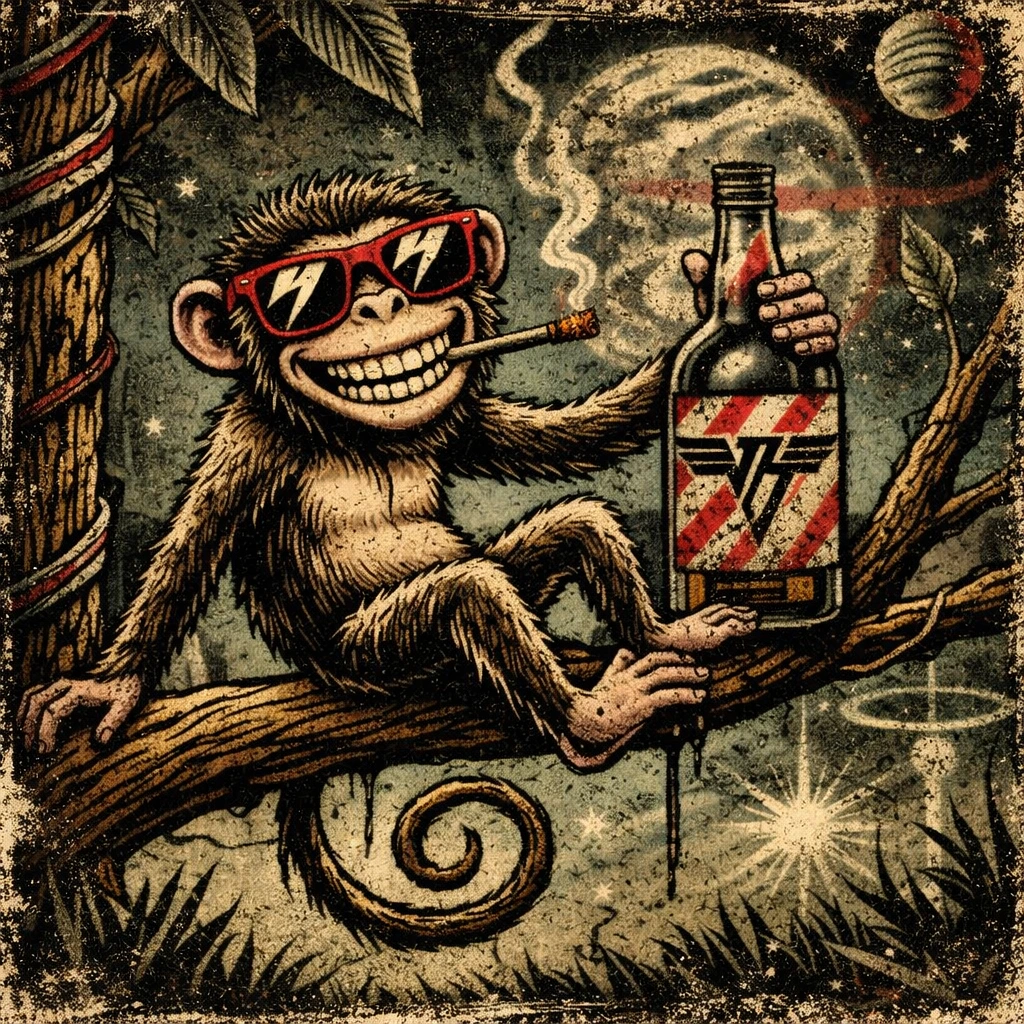
For like the simian tribe we mimic what we see,
aping the idols that dance within our glass boxes.
Were I their keeper, I would rule the monkeys thus:
I’d show them madness crowned, and bid them kneel.
I’d feed them poison, then punish thirst.
I’d have them brawl o’er the color of their fur,
and if my spirit grew ambitious, I’d found a faith:
“Renounce thy monkeying in this life, and lo —
in the next, a hundred golden harlots shall feed thee grapes.”
And when their faith did falter, I’d fake a voyage to the stars,
that they might once again believe.

The wise among them would name it imprinting,
this sorcery by which the greater ape commands the lesser.

Then from above — a voice, mortal and amused:
“Art thou well?”

“I know not,” quoth I, “for my bones yet argue the point.”
My knee was rent, my pride more grievously.

“Good thing thou art fair of face,” she called, “else thou’d be altogether witless.”

And so, limping down the lonely tree, I understood at last
why my god, the mighty Eddie, distilled this sacred drink.
Jack Daniel’s — philosopher’s stone of fools and kings alike!
For as art and music make uneasy marriage,
so too do whiskey and gravity quarrel unto death.
And thus I climb again, chastened, half-blind,
resolved to tread more softly —
for the world, like my bottle, is nearly empty,
and I, alas, am still falling.

Sunday Lament

There are some absences that arrive quietly.

No announcement.
No explanation.

Just a Sunday that feels slightly wrong.

Then another.

And another.

At first you assume something ordinary has happened.
Life is busy.
People get delayed.
Phones die.

But slowly the silence begins to take on a shape.

A chair that remains empty long enough begins to feel like a question.

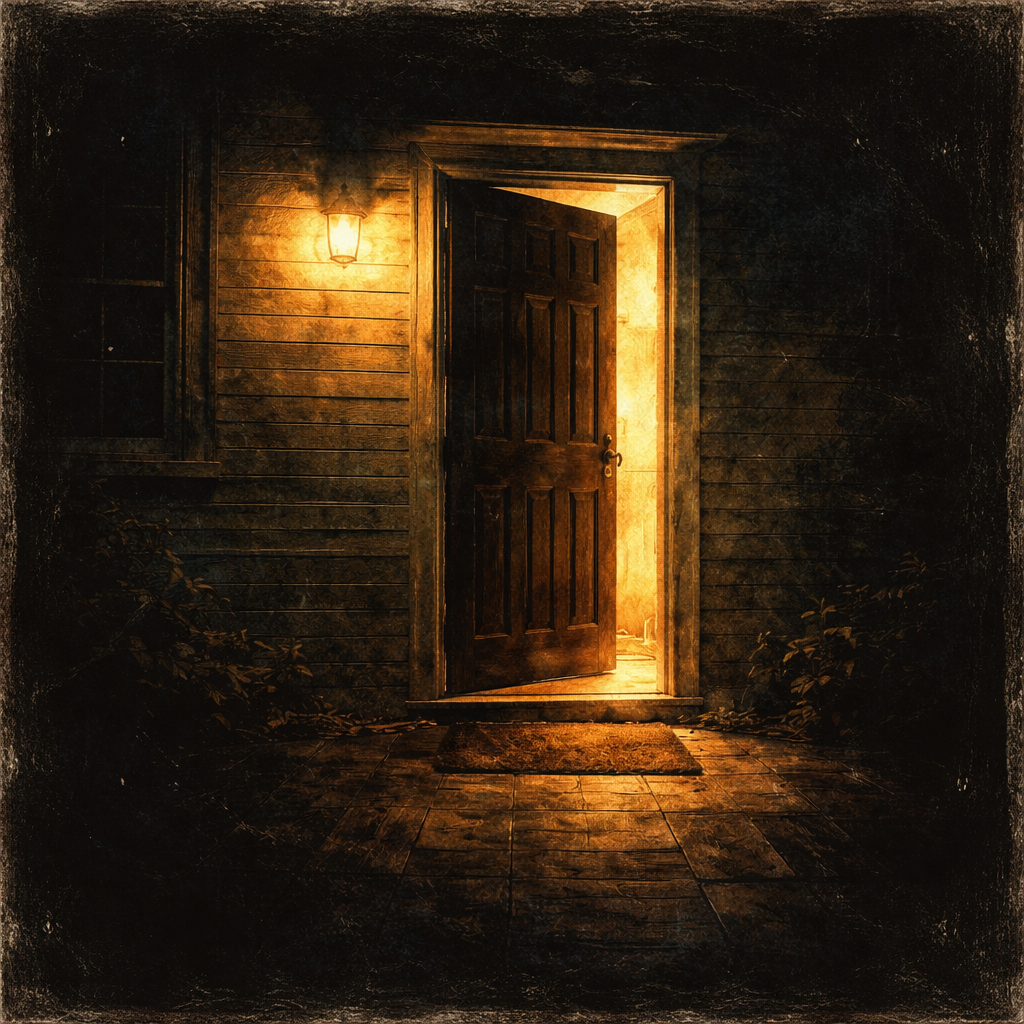
I keep the light on, just in case.

Where did you go?

Not in the dramatic sense.

Just the strange disappearance that happens when someone who used to show up…

doesn’t.

The old writers had a word for this.

Lament.

Not quite grief.

Not quite prayer.

Just speaking the confusion out loud.

Why?

Where are you?

Will things ever return?

She used to appear on Sundays.

Creative Sundays.

The strange ritual of making things out of nothing.

Stories.
Songs.
Fragments of imaginary worlds.

Sanera and Jarden waiting patiently inside an almost completed novel.

Some stories require two voices.
One person holds the thread while the other pulls it through.

And when the second voice disappears…

The story pauses.

Lament is not anger.

Not really.

It is the moment when you sit in the quiet room and realize:

Something meaningful was happening here.

And now the room is quieter than it used to be.

The ancient writers understood this feeling.

In the middle of their sorrow they wrote something strange:

“Because of God’s love we are not consumed.
His mercies are new every morning.”

It is a strange sentence to write in the middle of disaster.

But maybe that is what hope actually looks like.

Not certainty.

Just the possibility that tomorrow might bring a voice back through the door.

So the room waits.

The story waits.

And somewhere inside the quiet there is still a small belief that morning might arrive again with an answer.

So, wherever you are—

I hope the night is gentle with you.
And if the road ever circles back this way…

The light will still be on.

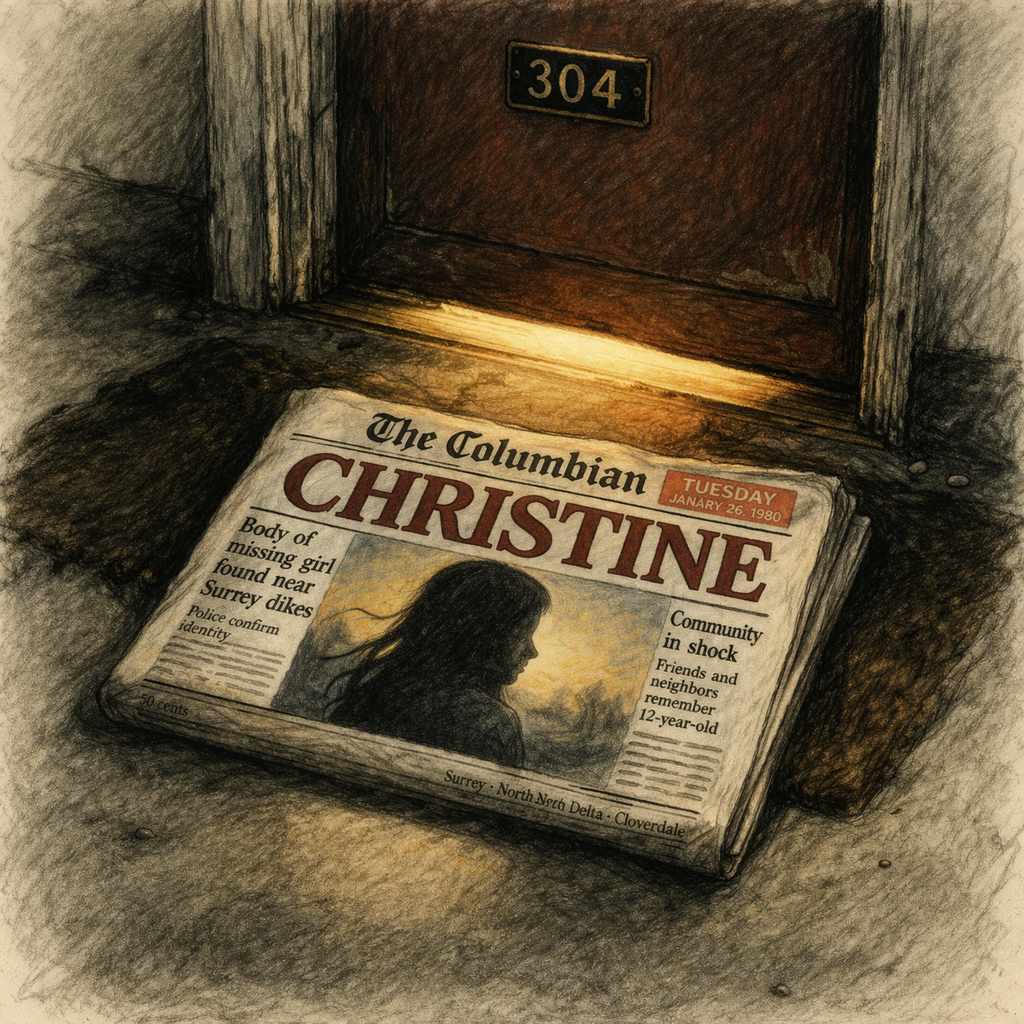
Christine

Twelve years old.
Third floor, Block 49, Mayfair Apartments.

I delivered the Columbian to her door.
She paid me a few times—

Her hair a little messy.

There was something about her that felt caring.

I had a small crush on her.
Not the kind you tell anyone about.
Just the kind where you hope
she’s the one who answers the door.

She was a tomboy—
tough without pretending,
kind without trying.

She used to go out with Rod,
a red-headed kid from a standalone house,
behind the school.
Rod was the second toughest guy in school.

The first was Ed—
a fat kid with a silent stare
who’d get you in a headlock
Then he’d sit on you so you couldn’t breathe.

One day at lunch, C-Rane and I went to Rod’s place,
smoked cigarettes and listened to music
Kiss Alive I. First time I ever heard them.

Christine wasn’t there,
but her name was.

She disappeared on her way home.

Six weeks later,
they found her body by the dikes.

Stabbed.
Strangled.
Left.

At first, they didn’t even treat it as suspicious.

I still remember that afternoon—
delivering the Columbian,
her face on the front page
as I dropped the paper at her door.

That moment never left me.

She was one of us.

And then she wasn’t.

Final Verse, First Light

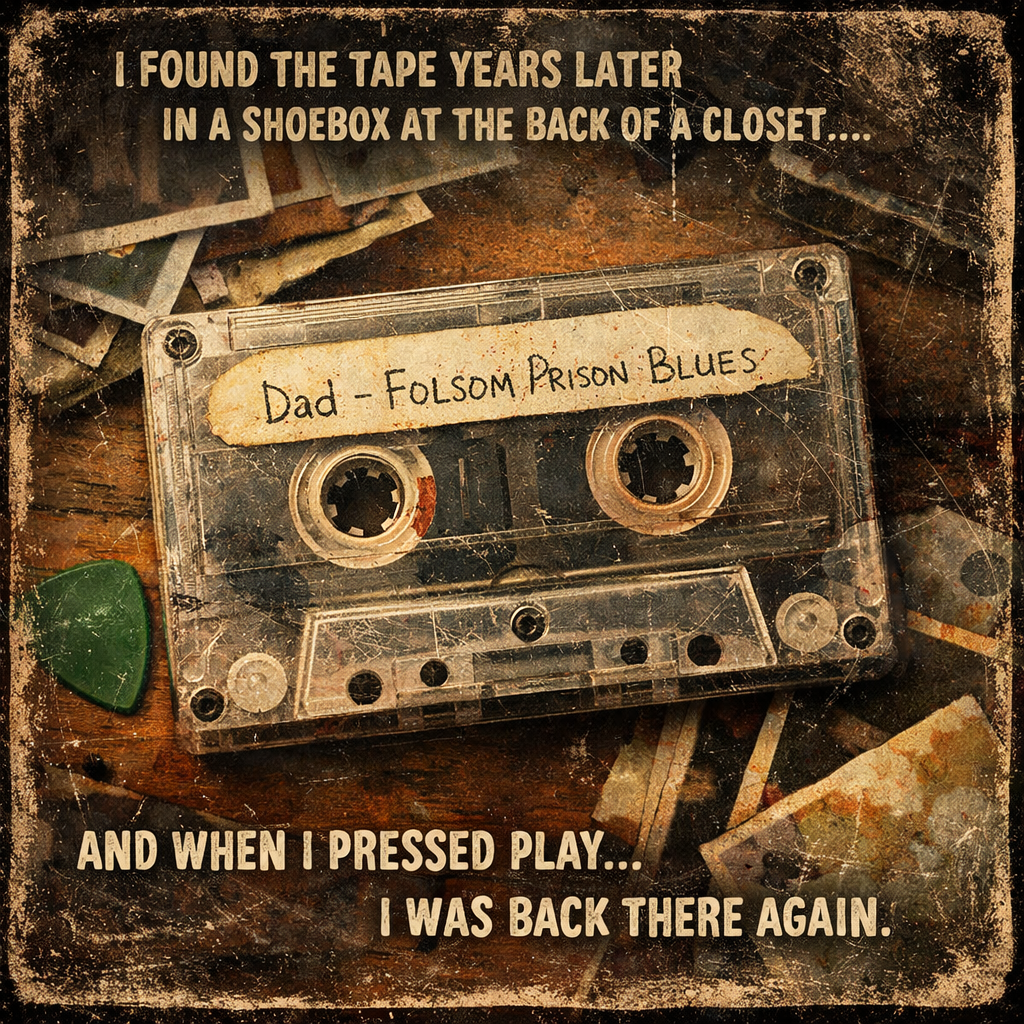
I found the tape years later in a shoebox at the back of a closet.

It was mixed in with old photographs and loose guitar picks. The case was cracked. The paper label had faded, but I could still see the letters pressed hard into it by a child’s hand.

Dad — Folsom Prison Blues

For a long time I just held it.

By then I had spent years recording things.

Hard drives full of songs and voices and late-night ideas.
Some found their way into the daylight. Most didn’t.

I found a cassette player in the basement.
I carried it upstairs.

The plastic creaked when I opened the lid.

For a moment I sat there, wondering if it would still play.

Then I slid the tape in.

The machine clicked.

The wheels began turning.

A little hiss filled the room.

And then the guitar.

Smaller than I remembered. A little thinner. The B string buzzing the way B strings always do.

Then his voice.

Low and half-smiling.

I remembered standing in the hallway with the recorder in my hands, trying not to breathe too loudly.

The tape was running slightly fast.

His voice sounded younger than I remembered. A little lighter. Like the morning itself had been preserved somewhere inside the plastic all these years, waiting for someone to press play.

I closed my eyes.

And I was back there again.

Bare feet on the hallway floor.
The little cassette recorder in my hand.
Trying not to breathe too loud.
Trying not to move.

Dad in the big chair near the window, bent forward over that old Framus guitar the color of whiskey.

Back then I thought I was sneaking up on something.

Now I think maybe I just caught him.

Not the larger-than-life version everyone else knew.

Just the man himself.

When I first made the tape, I thought I had captured a song.

Listening now, I realize I caught something else.

A moment that didn’t know it mattered.

I listened to the crack in his voice on the second verse.
The little pauses between lines.
The room around him.
The quiet that sat just behind the music.

Years later Matthew told me he had heard Dad sing too.

Not often.

But he remembered.

That made me strangely happy.

The song came to the end the same way it always had.

A last chord.
A breath.
Then a short silence.

Even on the tape you could feel it — the moment hanging there before anything else happened.

Then the faint shift of the chair.

I knew what came next before I heard it.

He turned.

Saw me standing there with the recorder.

For a split second he looked surprised.

Then he smiled.

I didn’t understand that smile then.

I thought it was just a father catching his kid doing something sneaky.

But listening to the tape now, years later, I think it meant something else.

I think he was just happy someone had been listening.

The tape clicks when it reaches the end.

The room goes quiet again.

And for the first time, that silence feels like peace.

Before Distortion Had a Name

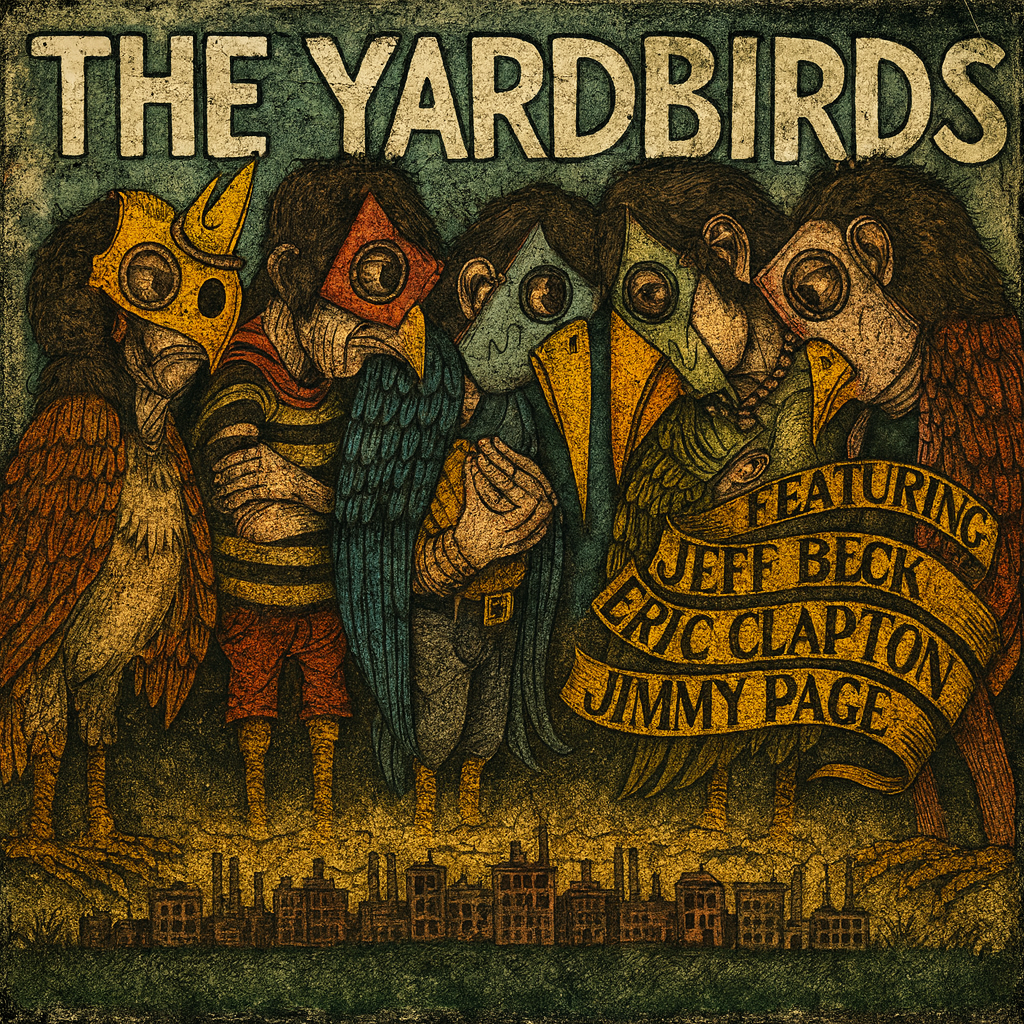
Before distortion had a name, before arena tours and stacks of Marshalls, there was a smoky cellar in Richmond, England, where blues ghosts whispered to teenage boys in torn trousers.

It was 1963, and The Yardbirds were just another scrappy R&B band looking for gigs in a post-war Britain still rationing electricity. But something in their DNA glowed radioactive. At the center of their sound was a holy-grail quest to redefine the electric guitar.

Eric Clapton was the first chosen one. He was rail-thin and sharp-featured, with a stare that could slice tape. To Clapton, consumed by the blues, the guitar was sacred. No gimmicks. No compromise.

And for a time, The Yardbirds carried that fire.

But when the band dared to flirt with pop—recording “For Your Love,” with its eerie harpsichord and suspicious commercial promise—Clapton packed his case and walked. He refused to watch the blues get sold like bubblegum.

So they found a madman to replace him.

Jeff Beck plugged in like lightning, coaxing squeals and feedback that sounded like broken radios from the future. He made his guitar speak a new language—half machine, half spirit animal.

To the rest of the band, Beck was a marvel and a menace. He’d show up late, or not at all. Sometimes he’d bash his amp mid-solo, not out of frustration but because he liked the sound it made. It was Jeff who made distortion beautiful.

Enter Jimmy Page.

At first he declined to join. He was a top session man—anonymous but revered—and didn’t want the chaos. But eventually the pull was too strong. He joined as bassist at first, then co-guitarist, then inheritor of the ashes.

Where Clapton had purity and Beck had magic, Page had vision. A mind that saw not just songs but worlds. He didn’t just want to play a great solo. He wanted to produce sonic temples.

For a brief moment, Beck and Page shared the stage—twin comets burning through the same night. The band couldn’t handle it: two wizards, one cauldron. The fuse burned fast, and The Yardbirds dissolved.

But something heavier gathered in the dark. A frequency only Jimmy Page could hear.


Ranking Thunder: The Albums of Led Zeppelin

Before hard rock found its own voice, it inherited the thunder of the previous generation.

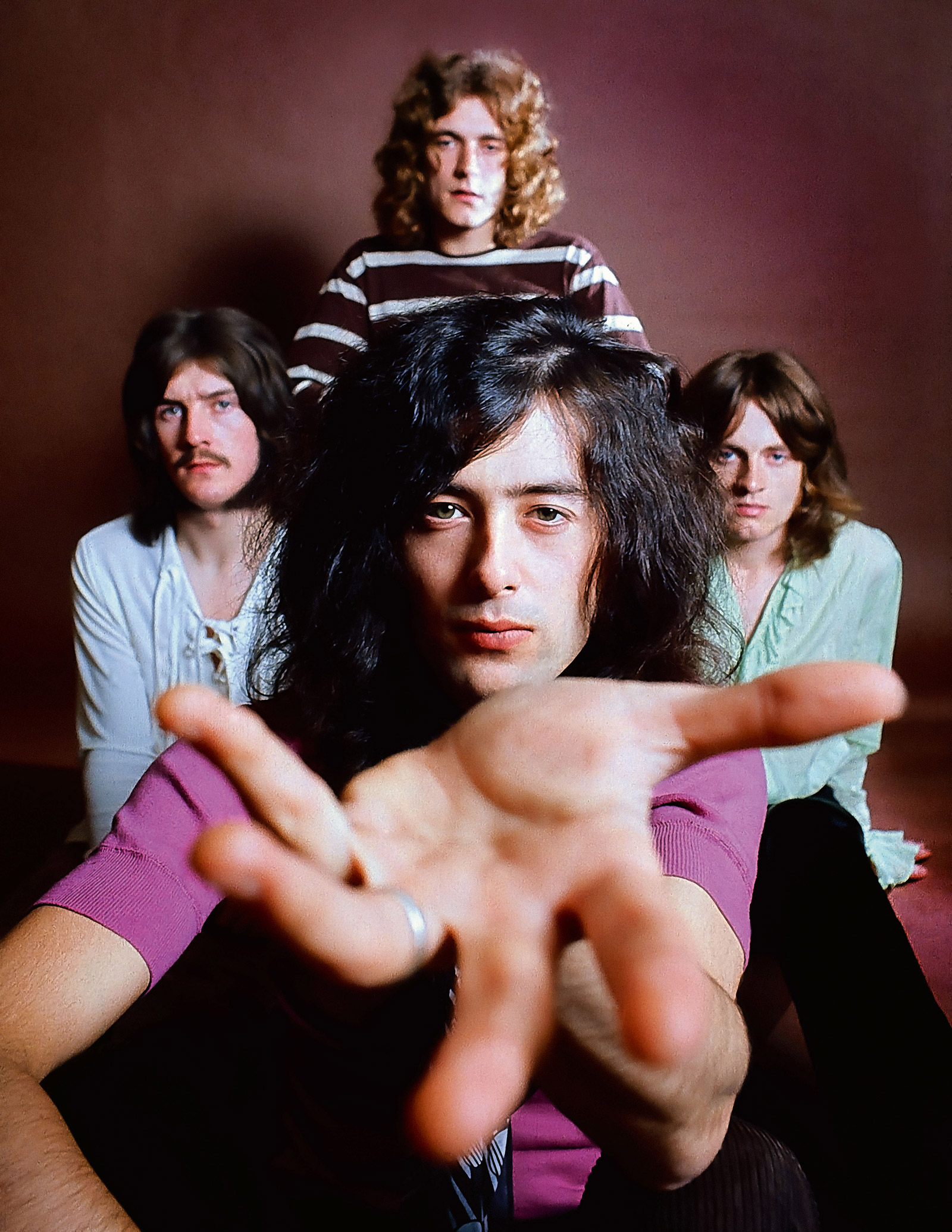
And no band thundered louder than Led Zeppelin.

Jimmy Page wasn’t just the guitarist.
He was the architect — producer, arranger, and keeper of the myth.

Ranking Zeppelin albums is dangerous business, but here’s my take.


1. Led Zeppelin IV (1971)

This is the temple.

It’s impossible to talk about Zeppelin without talking about the fourth album. Engineer Andy Johns helped Page capture the thunder of “When the Levee Breaks” by placing John Bonham’s drums in a stairwell and miking them from above. The result became one of the most famous drum sounds in rock history.

Then there’s “Stairway to Heaven.”

But the real magic of Led Zeppelin IV is range.

“Black Dog” and “Rock and Roll” roar like muscle cars.
“The Battle of Evermore” drifts into eerie folk mysticism, with Sandy Denny’s ghostly harmonies giving the song the feeling of an ancient warning carried through fog.

“Going to California” is the album’s moment of stillness. Page’s acoustic guitar drifts beneath Plant’s searching voice like a traveler speaking softly after a long road. In a record full of thunder, it’s the sound of the storm pausing long enough to breathe.

This is the moment Zeppelin became myth.


2. Led Zeppelin II (1969)

This is where the band discovered its power.

Recorded across multiple studios while the band was constantly touring, Led Zeppelin II feels raw, hungry, and slightly out of control.

Engineer Eddie Kramer helped Page shape that chaos into something explosive. Kramer had already worked with Jimi Hendrix, and his aggressive engineering style fit Zeppelin perfectly.

“Whole Lotta Love” alone rewrote the rulebook for hard rock.

The riffs are heavier.
The grooves swing harder.
Everything feels bigger.

This album doesn’t sound careful.

It sounds hungry.


3. Physical Graffiti (1975)

The most complete Zeppelin album.

A double LP that somehow never feels bloated.

“Kashmir” is the crown jewel — a colossal, hypnotic march that sounds like rock music discovering the desert for the first time.

Page dug through years of tapes to build the record, resurrecting unfinished tracks and shaping them into something massive. The result is Zeppelin at full scale: blues, hard rock, folk, funk, mysticism, and sheer excess all colliding together.

“In My Time of Dying” feels biblical.
“Trampled Under Foot” grooves like mechanized funk.
“Ten Years Gone” aches with distance and memory.

This is the last moment before excess became a burden.

The last pure expression of Zeppelin’s boundless ambition.


4. Led Zeppelin I (1969)

The opening strike.

Recorded quickly and cheaply, the debut sounds like a live band kicking down the studio door.

Engineer Glyn Johns helped Page capture that raw electricity with remarkable clarity. The performances feel immediate, almost dangerous, like the tape machine is barely keeping up with the band.

The blues is everywhere — but twisted into something louder, faster, and far more violent.

“Dazed and Confused” feels sinister.
“Communication Breakdown” practically invents punk energy years early.

Heavy rock begins here.


5. Led Zeppelin III (1970)

The curveball.

After two massive rock records, Zeppelin retreated into acoustic guitars, folk textures, and open space.

“Immigrant Song” is the lone war cry.
The rest explores quieter territory.

Page and Andy Johns layered mandolins, acoustics, and room ambience into something warm and strangely intimate. “That’s the Way” and “Tangerine” feel nostalgic without becoming sentimental.

It confused fans at the time.

Now it sounds fearless.

Led Zeppelin III doesn’t abandon power.

It transforms it.

The result is music that sounds like a storm choosing to whisper instead of break.


6. Houses of the Holy (1973)

This is Zeppelin experimenting.

The beast changes shape.

Eddie Kramer helped guide the band through one of their strangest and most adventurous records.

“The Rain Song” is gorgeous and mournful.
“No Quarter” descends into pure atmosphere and shadow.
“The Crunge” and “D’yer Mak’er” show the band deliberately refusing to become predictable.

It’s messy in places.

But that’s part of its charm.

This is a band restless at the height of its powers, testing how far Zeppelin could stretch before it stopped sounding like Zeppelin.


7. In Through the Out Door (1979)

By now the balance inside Zeppelin had changed.

Jimmy Page was struggling.
John Bonham was unraveling.

So John Paul Jones stepped forward.

The album is full of keyboards, cleaner production, and more structured songwriting. Engineer Leif Mases gave the record a polished clarity unlike anything earlier in Zeppelin’s catalog.

Compared to the cavernous depth of Physical Graffiti, this album feels almost clinical at times.

But that’s also what makes it fascinating.

It’s Zeppelin evolving into something more modern, more introspective, and slightly uncertain about its own future.

A strange record.

But an important one.


8. Presence (1976)

Zeppelin under pressure.

Robert Plant recorded much of the album while recovering from serious injuries. Page was exhausted and increasingly trapped inside addiction.

The result is stripped down, tense, and relentless.

“Achilles Last Stand” charges forward like a battle anthem — one of the greatest performances Zeppelin ever recorded.

The rest of the album feels almost claustrophobic.
No mysticism.
No grandeur.
Just survival.

Engineer Keith Harwood captured the band with very little ornamentation. The mix is dry, sharp, and unforgiving.

Presence has no radio-friendly warmth.

It burns instead.

Not their most beloved record.

But maybe their most defiant.


9. Coda (1982)

An epilogue.

Released after John Bonham’s death, Coda collects leftover tracks from earlier sessions. It was never intended to be a true final statement.

And yet it still matters.

“Wearing and Tearing” thrashes with surprising ferocity, hinting at directions the band might have explored had Zeppelin survived into the 1980s.

If Coda feels incomplete, it’s because it was never meant to be whole.

It’s the last echo of a storm that had already passed.

The gods descended.
The thunder faded.

But the records remain.