 “The first thing you must understand is that I loved her.
I chose her.
And when you choose someone, they’re supposed to stay chosen.
She said she was leaving.
I remember the way the light leaned through the kitchen window when she said it — soft, almost apologetic.
She didn’t understand that leaving is a form of erasure.
And I have always had difficulty with erasure.”
__
In a small rented room in Texas, 1968, songwriter Leon Payne adjusted a line on a yellow legal pad.
Then he paused.
The melody was simple. Almost tender. That was important. The voice must not sound violent. Violence is noisy. This man — whoever he was — would not be noisy.
Leon lifted the guitar and played the progression again. It sounded like any other country lament. Steel guitar would glide across it gently. The kind of glide you’d expect in a song about lost love.
He tapped the pencil against the margin.
What happens if he doesn’t regret it?
That was the real question.
Not whether the character killed.
But whether he felt justified.
Leon felt a faint tightening in his chest. He could soften it. He could add trembling. A note of sorrow.
He did not.
He wrote the line clean.
__
“I didn’t mean to frighten her.
It’s just that she began speaking about “freedom.”
As if freedom were something outside of me.
Mama used to say that love means staying.
Mama understood.
Mama never left.
There are things you do for love that others call mistakes. That is because others have small definitions.”
__
Leon set the pencil down.
He leaned back in the chair.
Who is this man?
He could feel him now — not monstrous, not raging — but structured. Polite. The kind of man who nods in conversation. The kind of man who speaks gently about terrible things.
Leon felt something shift inside himself. Not identification. Not sympathy.
He wrote another verse.
__
“When you bury something, the earth does not protest.
It is neutral.
I chose a place that would not flood. I am not careless. I considered the roots of the trees. I did not want disturbance.
These things matter.
She would have understood eventually.
Mama always did.”
__
Leon stopped.
The calmness of the voice unsettled him more than anger would have. If the man screamed, the song would become theater. But this — this was confession without friction.
He walked to the window. Outside, Texas moved along in the ordinary daylight.
He returned to the table.
He knew radio might refuse it.
He knew people would call it sick.
But he also knew something else:
This was honest.
Not honest about murder.
Honest about justification.
He finished the final lines carefully, almost reverently.
No judgment.
No thunder.
Just the quiet voice of a man explaining himself.
__
“You may think I am cruel.
But cruelty requires enjoyment.
I was simply preserving what was mine.
And if Mama asked me today whether I would do it again —
Well.
Mama always knew what was best.”
__
When the song was done, Leon read the lyric from beginning to end.
It did not tremble.
That was the most dangerous part.
He could feel the character standing somewhere behind his shoulder, patient, grateful even. As if thankful for the opportunity to be heard.
Leon folded the paper once.
He did not smile.
He did not shudder.
He simply understood that some stories, once written, do not belong entirely to the writer anymore.
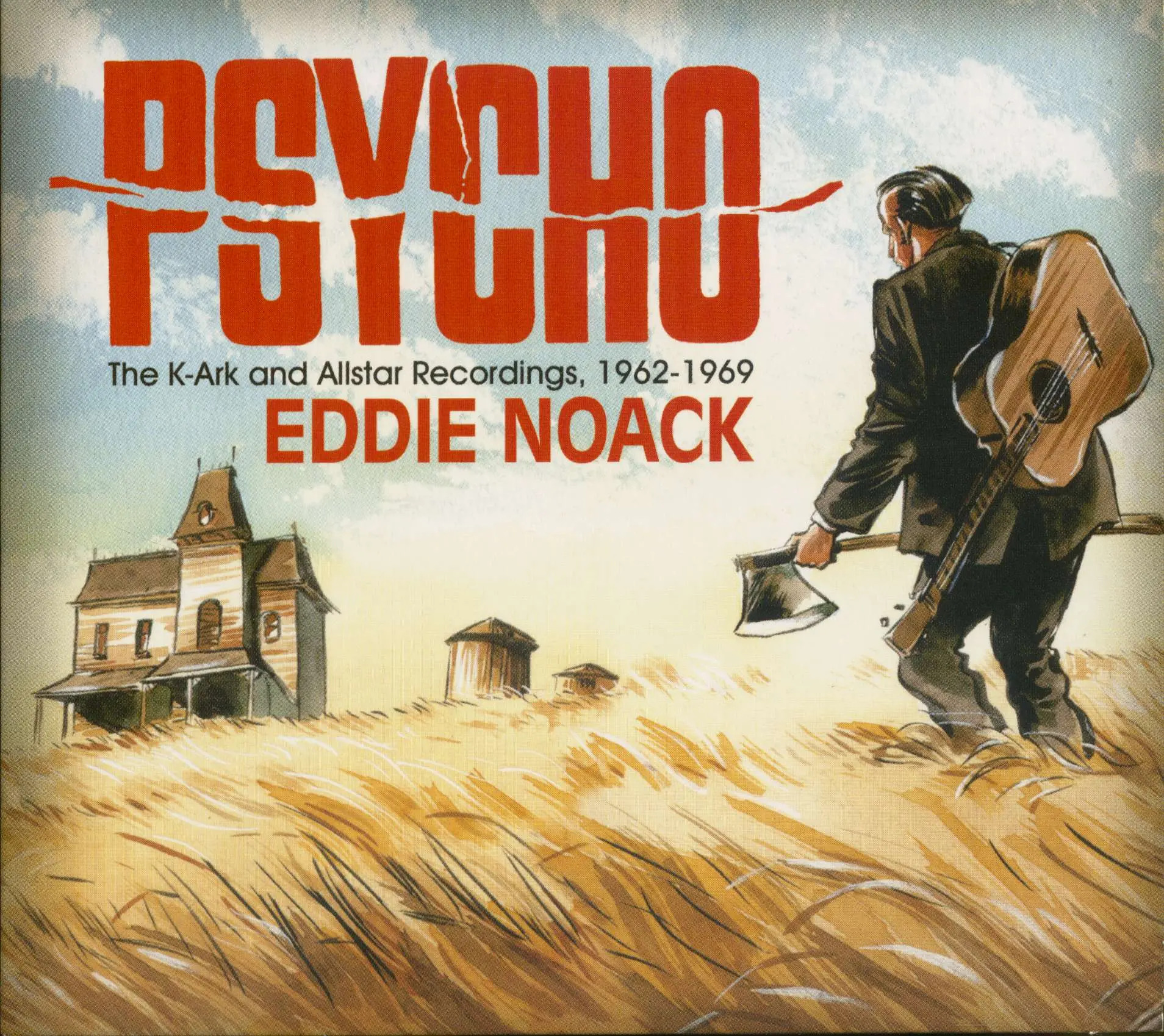
When the needle would eventually lower onto the vinyl, Eddie Noack’s voice would not sound like performance.
The song begins uptempo — familiar, traditional, country.
Then the verse drops deep into the abyss of a heavy half-time pocket.
The groove widens.
The air changes.
The steel guitar begins to hover instead of cry. Its upper notes hang longer than expected. The rhythm section stops pushing forward and instead sits back, allowing space to accumulate.
That space is where the unease lives.
After the verse settles into its widened half-time gravity, the chorus shifts into a lighter, almost off-beat sway. It feels looser, less weighted — as if the music itself refuses to carry the moral burden of the lyric. That contrast is subtle, but it compounds the unease.
The vocal does not rise to match the horror of the words. It remains conversational. That contrast — calm delivery over suspended time — produces the unsettling sensation the song is now known for.
It does not feel like a performance.
It feels like memory being recited without emotion.
“Psycho” was produced by John Capps and released by K-Ark Records in 1968. Capps was connected with K-Ark, which was a very small independent Texas label — far from the major-label system of Nashville.
It did not arrive wrapped in Nashville polish or mainstream expectation. Perhaps that is why it sounds so unadorned. The production does not dramatize the story. It contains it.
And containment is what makes it dangerous.
A screaming narrator can be dismissed.
A rational one lingers.
By the time the final repetition of “Mama” fades, there is no moral thunder. No punishment. No resolution. The voice never shakes.
It does not tremble.