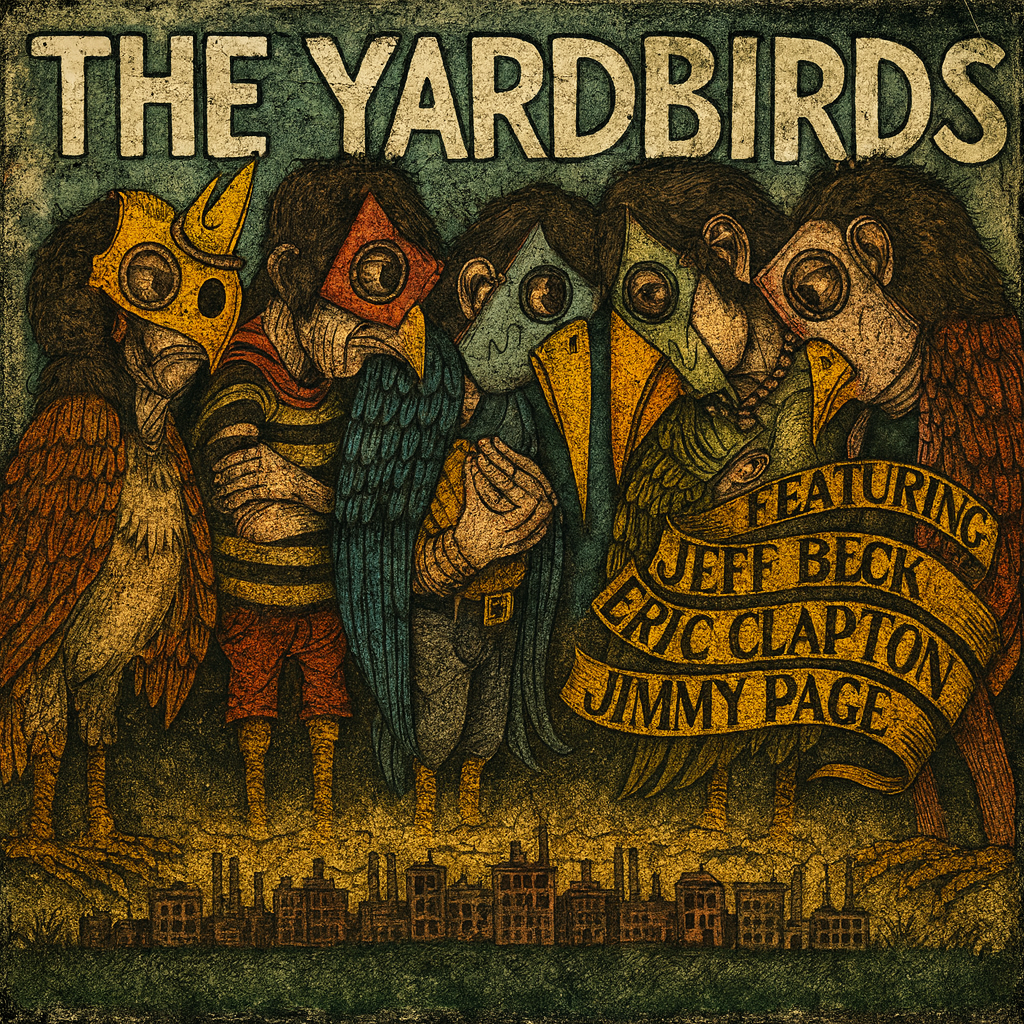
 Before distortion had a name, before arena tours and stacks of Marshalls, there was a smoky cellar in Richmond, England, where blues ghosts whispered to teenage boys in torn trousers.
It was 1963, and The Yardbirds were just another scrappy R&B band looking for gigs in a post-war Britain still rationing electricity. But something in their DNA glowed radioactive. At the center of their sound was a holy-grail quest to redefine the electric guitar.
Eric Clapton was rail-thin, a blues obsessive with a stare that could slice tape. He didn’t just admire Muddy Waters — he believed in him. To Eric, the guitar was sacred. No gimmicks. No compromise.
And for a time, The Yardbirds carried that fire.
But when the band dared to flirt with pop—recording “For Your Love,” with its eerie harpsichord and suspicious commercial promise—Clapton packed his case and walked. He refused to watch the blues get sold like bubblegum.
The band barely blinked.
They found a madman to replace him.
Jeff Beck plugged in like lightning, coaxing squeals and feedback that sounded like broken radios from the future. He made his guitar speak a new language—half machine, half spirit animal.
To the rest of the band, Beck was a marvel and a menace. He’d show up late, or not at all. Sometimes he’d bash his amp mid-solo, not out of frustration but because he liked the sound it made. It was Jeff who made distortion beautiful.
Enter Jimmy Page.
At first he declined to join. He was a top session man—anonymous but revered—and didn’t want the chaos. But eventually the pull was too strong. He joined as bassist at first, then co-guitarist, then inheritor of the ashes.
Where Clapton had purity and Beck had magic, Page had vision. A mind that saw not just songs but worlds. He didn’t just want to play a great solo. He wanted to produce sonic temples.
For a brief moment, Beck and Page shared the stage—twin comets burning through the same night. The band couldn’t handle it: two wizards, one cauldron. The fuse burned fast, and The Yardbirds dissolved.
But something heavier gathered in the dark. A frequency only Jimmy Page could hear.