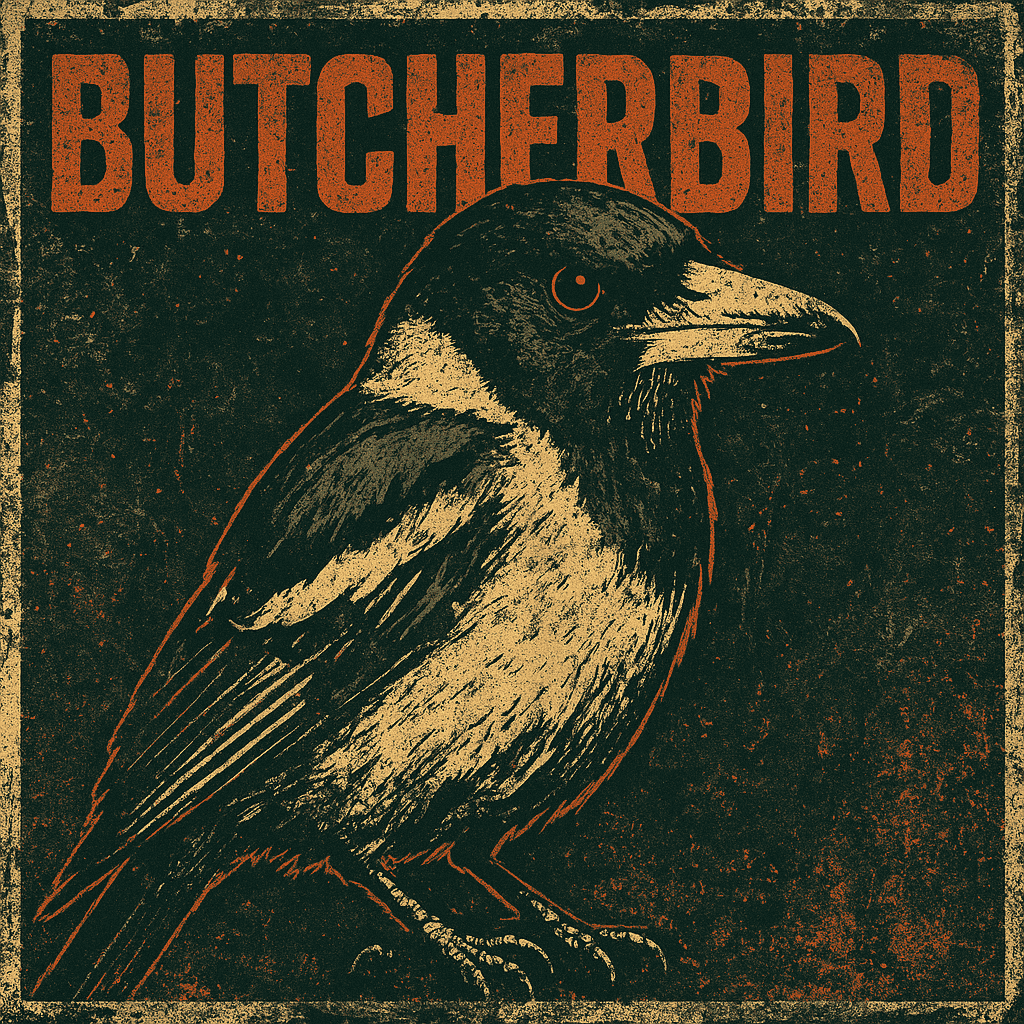
 Each morning, before the sun takes full command of the sky, he sings.
The butcherbird.
Not for mates, not for territory, not for any reason nature would approve—
but for the joy of it.
The danger of it.
The mystery of it.
There is a note he favors. A single note.
Or so it seems.
Depending on how you arrive at it—on your posture, your purpose, your faith—
it can sound like salvation—or unrest.
The tritone.
To the medieval ear, it was corruption incarnate.
A sacred shape bent into disfigurement.
Something perfect gone wrong.
They called it Diabolus in Musica.
The Devil in Music.
But the butcherbird sings it like it belongs.
Casually. Joyfully. Without apology.
He does not fear the Devil’s interval. He embodies it.
Where humans once tiptoed around the tritone in candlelit choirs,
the butcherbird whistles it to the sun.
Not hidden.
Not ashamed.
Declared.
He has no theory, no name for it.
And yet his song speaks truths many composers fear to write.
Because the butcherbird knows what we try to forget:
That conflict creates.
That dissonance gives shape to resolution.
That beauty without struggle is just decoration.
He sings the sharp 4 with optimism—
stretching upward toward the unknown.
He dives into the flat 5 with menace—
taunting the limits of order.
The same pitch. One holy. One profane.
One note, split by intention.
The butcherbird doesn’t choose sides.
He sings them both.
And in doing so, he reveals the lie we cling to:
that harmony is peace.
It isn’t.
Harmony is earned—through tension, through contradiction, through almost breaking.
The Devil—tired, elegant, amused—once claimed the tritone as his signature.
But the butcherbird used it first.
And he never needed to summon demons.
Only morning.
Only sky.
The butcherbird already knew
that “not yet” is sometimes more powerful than “forever.”
And so, long before Sabbath tuned to darkness,
a lone bird carved a space in the silence.
A song that hovered—not here, not there.
A song between.
Between heaven
and the place where angels won’t sing.
So listen, if you dare.
Not to summon the Devil—he’s been busy anyway.
But to confess that you, too, have been divided.
You, too, have heard the butcherbird’s song and felt something stir.